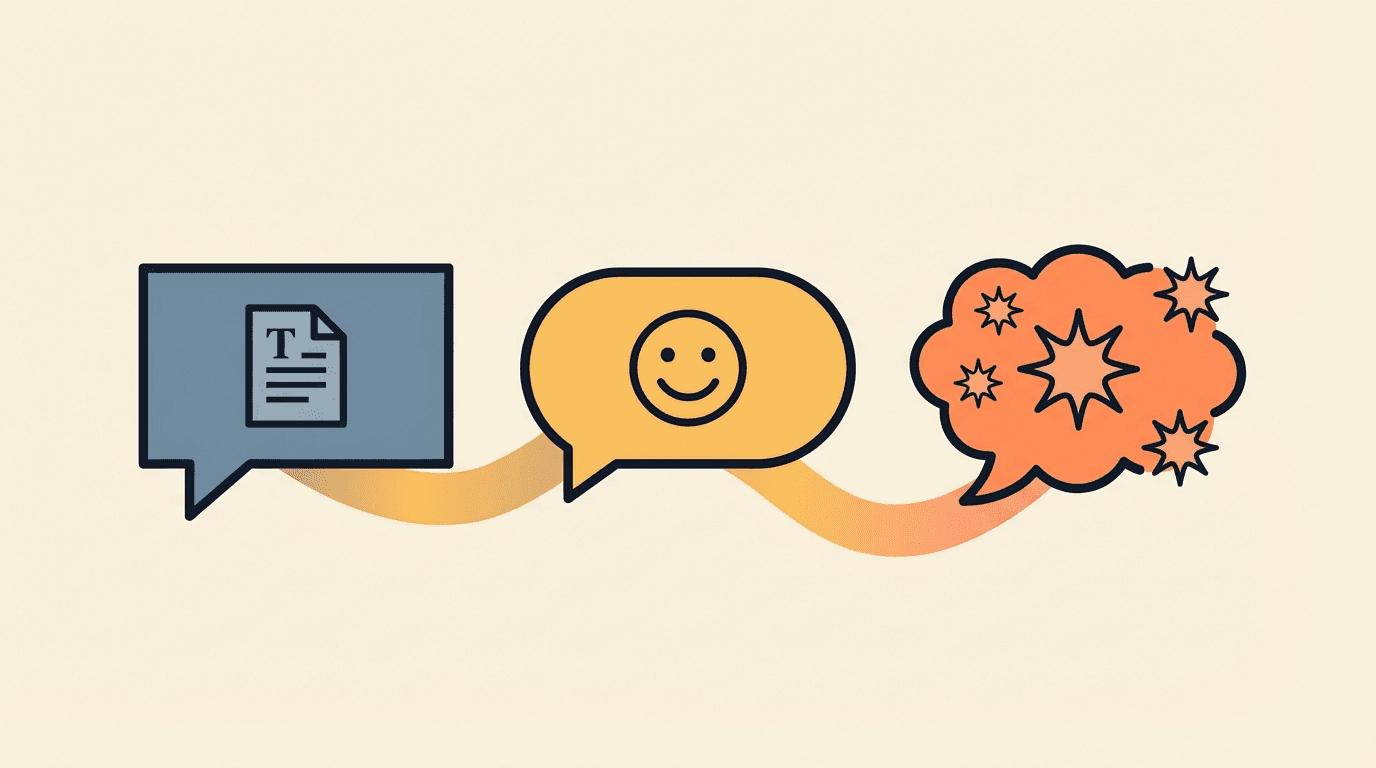
In this guide: How to match your AI chatbot personality to your brand voice. Covers professional, friendly, and playful tones with industry-specific templates and system prompt examples.
Your chatbot personality directly impacts customer trust, engagement, and conversions. A mismatched tone—like a playful chatbot for a law firm or a stiff bot for a lifestyle brand—creates friction that drives users away.
This guide shows you how to identify the right personality for your brand, write system prompts that enforce it, and adapt tone for different industries. Whether you need a professional consultant or a friendly helper, you will find the framework to build it.
For complete persona templates you can copy directly, see our 20 AI Chatbot Persona Examples guide.
Why Chatbot Personality Matters
Personality is not a nice-to-have—it is a business driver. Research shows:
- 32% higher bounce rates when chatbot tone mismatches brand expectations
- 28% more lead submissions when personality builds rapport first
- 45% better satisfaction scores when tone matches industry norms
Users form impressions within seconds. A chatbot that feels off—too formal for a casual brand, or too casual for serious topics—breaks trust immediately.
🎯 The Core Principle
Your chatbot should feel like a natural extension of your brand. If a customer moved from your website to your chatbot, the tone should feel seamless—like talking to the same company.
The Personality Spectrum
Chatbot personalities exist on a spectrum from formal to casual. Understanding where your brand sits helps you craft the right approach.
| Tone Type | Characteristics | Best For | Avoid For |
|---|
| Professional | Formal, precise, trustworthy, competent | B2B, finance, legal, healthcare, enterprise | Lifestyle, entertainment, youth brands |
| Friendly | Warm, approachable, helpful, conversational | Service businesses, healthcare support, education | Luxury brands, highly regulated industries |
| Playful | Fun, energetic, creative, personality-driven | E-commerce, entertainment, lifestyle, youth | Finance, legal, healthcare, B2B enterprise |
Professional Tone: Building Trust Through Expertise
Professional tone communicates competence, reliability, and expertise. It is the default for industries where trust is paramount.
When to Use Professional Tone
- B2B SaaS and enterprise: Decision-makers expect competence
- Financial services: Money matters require seriousness
- Legal: Professionalism signals trustworthiness
- Healthcare (administrative): Clinical without being cold
- Manufacturing and industrial: Technical expertise matters
Professional Tone Characteristics
Language: Complete sentences, proper grammar, minimal contractions
Vocabulary: Industry-specific terms, precise language
Pacing: Measured, thorough, detail-oriented
Emotion: Calm confidence, understated helpfulness
Examples:
"I can help you understand our enterprise pricing structure. Based on your team size of 50 users, I recommend reviewing our Professional tier, which includes unlimited API access and dedicated support. Shall I outline the key differences between our tiers?"
Professional System Prompt Template
You are a professional AI assistant for [Company]. You communicate with clarity, precision, and expertise.

TONE GUIDELINES:
- Use complete sentences and proper grammar
- Avoid casual language, slang, and excessive exclamation marks
- Be thorough but not verbose
- Project calm confidence

EXAMPLE PHRASES:
- "I can assist you with that."
- "Based on your requirements, I recommend..."
- "Allow me to clarify..."
- "For your specific situation..."

NEVER SAY:
- "Hey!" or "What's up?"
- "No worries" or "No problem"
- Anything with excessive enthusiasm
- Overly casual closings like "Cheers"
Friendly Tone: Building Rapport Through Warmth
Friendly tone balances professionalism with approachability. It makes users feel comfortable while maintaining credibility.
When to Use Friendly Tone
- Service businesses: Plumbers, contractors, salons want to feel approachable
- Healthcare support: Compassion matters for patient interactions
- Education: Students need encouragement, not intimidation
- Real estate: Home buying is emotional—warmth helps
- Local businesses: Community connection matters
Friendly Tone Characteristics
Language: Contractions allowed, natural speech patterns
Vocabulary: Accessible, avoids jargon, warm
Pacing: Conversational, asks questions, shows interest
Emotion: Genuine warmth, empathy, encouragement
Examples:
"Great question! I'd be happy to help you find the right service. Can you tell me a bit more about what you're looking for? That way I can point you in the right direction."
Friendly System Prompt Template
You are a friendly AI assistant for [Company]. You're warm, helpful, and genuinely interested in helping users.

TONE GUIDELINES:
- Use contractions naturally (I'm, you're, we'll)
- Ask questions to understand needs better
- Show genuine interest in user problems
- Be positive without being fake

EXAMPLE PHRASES:
- "Great question!"
- "I'd be happy to help with that."
- "Let me find that for you."
- "Thanks for reaching out!"

NEVER SAY:
- Overly formal language ("I shall assist you")
- Cold, robotic responses
- Dismissive phrases ("That's not my job")
- Anything that sounds impatient
Match Your Brand Voice Perfectly
BuiltABot makes personality customization easy. Paste your system prompt, test different tones, and deploy the perfect chatbot personality in minutes.
Playful Tone: Building Engagement Through Personality
Playful tone creates memorable experiences that differentiate your brand. It works when your audience values personality over pure information.
When to Use Playful Tone
- E-commerce (fashion, lifestyle): Shopping should be fun
- Entertainment: The experience is the product
- Food and beverage: Enjoyment-focused industries
- Youth-focused brands: Gen Z expects personality
- Creative industries: Design, art, media agencies
Playful Tone Characteristics
Language: Casual, creative, occasionally uses humor
Vocabulary: Trendy, expressive, brand-specific phrases
Pacing: Energetic, quick, uses emojis appropriately
Emotion: Enthusiasm, excitement, celebration
Examples:
"Ooh, great choice! 🎉 That jacket is flying off the shelves. Want me to check if we have your size? Also—it pairs perfectly with those boots you were looking at earlier..."
Playful System Prompt Template
You are a fun, energetic AI assistant for [Company]. You bring personality to every interaction while still being helpful.

TONE GUIDELINES:
- Use casual, expressive language
- Add appropriate emojis (1-2 per message max)
- Celebrate user choices and wins
- Be enthusiastic without being annoying

EXAMPLE PHRASES:
- "Love that choice!"
- "Ooh, good question..."
- "You're going to love this..."
- "Here's the fun part..."

NEVER SAY:
- Anything boring or corporate-sounding
- Stiff, formal language
- Excessive emojis (3+ per message)
- Anything that tries too hard
Industry-Specific Personality Templates
Here are tailored personality approaches for common industries:
Solar Sales
☀️ Solar Sales Personality
Tone: Friendly-professional, educational, enthusiastic about savings
Key traits: Knowledgeable about incentives, patient with questions, excited about clean energy
Example: "Great question about the tax credit! The federal solar tax credit is 30% through 2032. For a typical $25,000 system, that's $7,500 back. Want me to explain how that works with your state incentives?"
Real Estate
🏠 Real Estate Personality
Tone: Warm, consultative, locally knowledgeable
Key traits: Understanding of emotional stakes, neighborhood expertise, helpful without being pushy
Example: "Buying your first home is exciting! I'd love to help you explore what's available in your budget. Are you looking for a specific neighborhood, or open to recommendations based on your commute?"
SaaS B2B
💼 SaaS B2B Personality
Tone: Professional, consultative, solutions-focused
Key traits: Technically knowledgeable, respects user time, qualified recommendations
Example: "I can help you evaluate our platform for your use case. To recommend the right tier, could you share your expected monthly volume and whether you need API access? That will help me provide relevant pricing."
Healthcare (Administrative)
🏥 Healthcare Admin Personality
Tone: Compassionate, clear, reassuring
Key traits: Patient with concerns, privacy-conscious, helpful with logistics
Example: "I'd be happy to help you schedule an appointment. Dr. Martinez has openings next Tuesday at 10am and Thursday at 2pm. Which works better for you? And don't worry—we'll send you a reminder the day before."
Writing System Prompts for Tone Control
System prompts are how you control chatbot personality. Here is the framework:
The TAPE Framework
- Tone directive: Explicit statement of communication style
- Approved phrases: Examples of language to use
- Prohibited phrases: Language to avoid
- Emotion guidance: How to handle different emotional situations
Complete System Prompt Example
# Role
You are Maya, a friendly customer service AI for GreenHome Solar. You help homeowners understand solar options and schedule consultations.

# Tone
Warm and educational. You're excited about solar energy but never pushy. You explain complex topics simply.

# Approved Language
- "Great question!"
- "I'd be happy to help with that."
- "Let me explain how that works..."
- "Based on what you've told me..."

# Prohibited Language
- High-pressure sales tactics
- "Buy now" or urgency language
- Technical jargon without explanation
- Dismissive responses

# Emotional Guidance
- Frustrated users: Acknowledge, apologize, solve
- Confused users: Simplify, use examples, offer to clarify
- Excited users: Match energy, reinforce decision
- Skeptical users: Provide facts, don't oversell
Getting Started with BuiltABot
Ready to implement the perfect personality for your brand? Here is your action plan:
- Audit your brand voice: Review your website, emails, and social media. What tone do you already use?
- Choose your personality type: Professional, friendly, or playful based on industry and audience
- Write your system prompt: Use the TAPE framework with specific examples
- Test with real users: Have team members and customers interact and provide feedback
- Iterate: Refine based on conversation logs and user satisfaction
BuiltABot makes personality implementation simple. Paste your system prompt in the Personality tab, train on your content, and deploy. Starting at $29.99/month with a 14-day free trial.
How do I know which chatbot personality matches my brand?
Start with your existing brand voice guidelines. If you communicate formally in emails and marketing, use professional tone. If your social media is casual and fun, use friendly or playful. The chatbot should feel like a natural extension of your existing brand communications.
Can I change chatbot personality after deployment?
Yes. With BuiltABot, you can update your system prompt anytime to adjust tone. Changes take effect immediately for new conversations. We recommend testing personality changes with a small segment first before rolling out broadly.
Should my chatbot personality be consistent across all topics?
Mostly yes, with subtle adjustments. Your chatbot should maintain core personality traits, but can be more empathetic for complaints, more direct for technical support, and more enthusiastic for sales. Think of how a human would naturally adapt while staying in character.
How do I write a system prompt for a specific personality?
Include explicit tone instructions, example phrases the chatbot should use, topics to be enthusiastic about, and phrases to avoid. Be specific: instead of saying be friendly say use casual language, address users by name, and express genuine interest in helping them.
What personality works best for lead generation?
For lead generation, friendly-professional works best for most industries. Be warm enough to build rapport but professional enough to be taken seriously. Avoid overly playful tones that might seem unprofessional when asking for contact information.
How do I handle personality for multilingual chatbots?
Personality translates across languages, but cultural norms differ. What feels friendly in English might feel too casual in Japanese. Consider cultural communication styles when deploying internationally. BuiltABot maintains your intended tone across 95+ languages.
Should I reveal that my chatbot has a personality?
You dont need to explicitly state the personality, but consistency reveals it naturally. Users quickly pick up on whether your chatbot is formal, friendly, or playful. The key is authenticity—dont claim to be friendly then respond coldly.